Fred Iselin: From Glarus Snowfields to the Legend of Aspen

The story of a Glarner skier who carried Switzerland’s pioneering ski spirit across the Atlantic

A Glarner Childhood on Skis
Long before skiing became a global winter industry, it was an experiment in courage, curiosity and mountain practicality. Few places were as important to that experiment as Glarus. In 1893, Christof Iselin helped found the Skiclub Glarus, widely recognized as Switzerland’s first ski club; in 1902, he organized Switzerland’s first ski race; and in 1904, he encouraged both the creation of the Swiss Ski Association and the introduction of skis into the Swiss Army.
Fred Iselin was born in Glarus in 1914, into a household where skis were not a novelty but part of daily mountain life. According to the U.S. Ski & Snowboard Hall of Fame, Fred first put on skis at the age of four and, as a boy, skied to school. That detail is more than charming family lore. It captures the unusual world into which he was born: for Fred, skiing was not something one discovered on holiday; it was a language learned almost as early as walking.
The Father Behind the Legacy: Christof Iselin

To understand Fred, one must first understand the atmosphere created by his father. Christof Iselin was not merely an enthusiastic skier. He was a Swiss ski pioneer, a merchant, an officer and an organizer whose influence reached from Glarus into the national institutions of Swiss skiing. The Historical Dictionary of Switzerland records his early ski attempts in 1891 and 1892, the founding of the Skiclub Glarus in 1893, the first Swiss ski race in 1902 and his 1904 role in advocating both a national ski association and skis for the army.
The Swiss Alpine Club later summarized Christof’s role in unusually strong terms: before him, scattered ski experiments in Switzerland had failed to gain momentum; through his personal commitment, skiing achieved a breakthrough. The early Glarus story is vivid. Christof tried primitive self-made skis, obtained Norwegian skis, climbed the Schilt near Glarus in January 1893 and helped demonstrate the advantages of skis over traditional snowshoes during the famous Pragel Pass crossing.
“Glarus, not St. Moritz, was a key location in the development of skiing in Switzerland.” This is the central point emphasized by the Swiss Ski Museum, which identifies Christof Iselin as a key figure in the organized birth of Swiss skiing in 1893.
This history matters because Fred was not simply the talented son of a famous father. He grew up inside a living experiment. In the Iselin family, skiing was tied to sport, transport, military preparedness, education and mountain culture. That broad understanding would later shape Fred’s own style as a teacher: practical, bold, humorous and always focused on helping others feel at home on snow.
A Racer Formed by the Alps
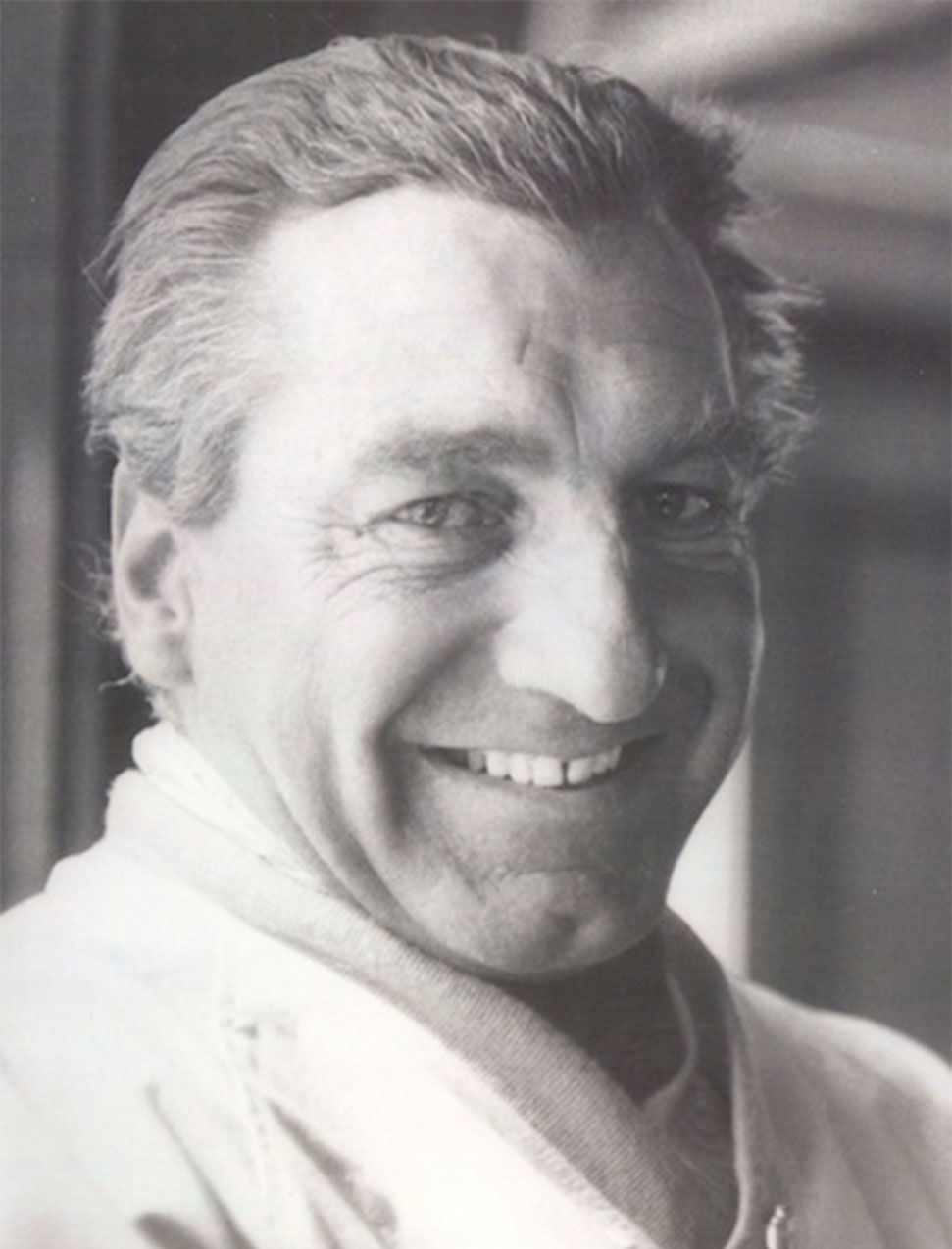
By his teenage years, Fred Iselin was already teaching skiing in Switzerland and later in Austria. In the late 1930s, he built a formidable reputation as a competitor. Sources connected with the Aspen Hall of Fame and Colorado ski history credit him with victories at the Grand Prix de Chamonix at Glaciers, the Brévent-Chamonix and the Lognon Downhill. His most dramatic achievement was an all-time record in the Grand Prix de l’Aiguille du Midi, a race later discontinued because it was considered too dangerous.
The U.S. Ski & Snowboard Hall of Fame places Fred among the pre-war racers known in major European and North American competitions. Its biography lists events such as the Far West Kandahar, the Harriman Cups, the 1939 F.I.S. International Championships in California and the Silver Skis at Mount Rainier. This combination of European technique and North American exposure positioned him perfectly for the next chapter of his life.
Fred was not merely fast. Otto Lang, the influential Sun Valley ski-school director who later became a filmmaker, remembered him as a skier of unusual power and intelligence. Lang wrote that Fred could slice through treacherous crust or heavy spring snow as if it were powder, calling him forceful, strong-legged, wise and cunning in difficult terrain.
Sun Valley: The American Beginning
Fred emigrated to the United States in 1939 and soon appeared in Sun Valley, Idaho, then one of America’s premier ski resorts. Sun Valley was not just a workplace; it was one of the great meeting points of European ski expertise and American winter ambition. There Fred taught under Otto Lang and worked in the same orbit as major figures such as Friedl Pfeifer, who would later become central to Aspen’s ski history.
In America, Fred’s Swiss background became an asset. He arrived with mountain credibility, racing experience and the European teaching tradition that American ski schools were eager to absorb. Yet what made him memorable was not pedigree alone. Accounts of Fred repeatedly return to his warmth, theatrical humor and ability to make skiing feel less intimidating. Otto Lang wrote that it was hard to think of him “without a chuckle and a warm feeling,” describing his gift for lightening serious situations with a phrase, a look or a gesture.
That personal quality is important. Skiing in mid-twentieth-century America was still expanding from a relatively elite pursuit into a broader recreational culture. To grow, it needed not only lifts and lodges, but teachers who could transform fear into confidence. Fred Iselin became one of those teachers.
Aspen: Teacher, Showman and Builder of Ski Culture

In 1947, Fred moved to Aspen, Colorado, just as the town was beginning its transformation from a former mining community into a modern ski destination. The move proved decisive. Aspen had opened Lift 1 and the Aspen Ski School shortly before Fred arrived, and he soon became one of the community’s most recognizable ski personalities.
Heritage accounts quoted by Aspen Snowmass Shrines describe him as a warm and gifted teacher, a bold and graceful skier, and a man with a talent for remembering names. That last detail says much about him. Ski instruction is technical, but it is also personal. A teacher who remembers names turns a class into a relationship. Fred’s charisma helped attract visitors, including Hollywood guests, and made him a regular presence in Aspen’s lively après-ski world. One Aspen recollection says of him that he “never drew a serious breath in his life.” The line should not be mistaken for frivolity. Fred’s humor was part of his teaching method and part of his public art. He was serious about skiing precisely because he wanted people to enjoy it. His own phrase captures that philosophy beautifully:
“The greatest sensation in skiing is the feeling of floating.” — Fred Iselin, quoted in Aspen Snowmass Shrines from Heritage Aspen material.
Fred eventually served in major ski-school leadership roles in Aspen, Buttermilk and Aspen Highlands. The Aspen Times later published a recollection by Andy Hanson arguing that Fred’s death marked the end of Aspen’s era of “stellar ski school directors.” Hanson credited him with hiring strong instructors from Aspen and abroad, embracing the Graduated Length Method for beginners and helping shape Aspen Highlands through terrain and lift development.
The Books: Ski Instruction with Wit

Fred Iselin’s influence also reached readers. His best-known book, Invitation to Skiing, written with A. C. Spectorsky and published by Simon & Schuster in 1947, became a popular guide to ski technique. It was later revised as The New Invitation to Skiing and Invitation to Modern Skiing. Google Books identifies The New Invitation to Skiing by Fred Iselin and Auguste C. Spectorsky as a Simon & Schuster publication from 1958.
The titles themselves are revealing. Fred did not write Commandments of Skiing or The Discipline of Skiing. He issued an invitation. That tone matches the man described by his friends: technically accomplished, occasionally controversial, deeply funny and committed to bringing people into the sport. The Aspen Hall of Fame notes that the books were witty, fun to read and fun to use, “as if Fred is teaching in person.”
A Life from the Mountains, to the Mountains
Fred Iselin died in 1971 at the age of 57. According to the U.S. Ski & Snowboard Hall of Fame, he had suffered a severe fall during filming in the Swiss Alps and, after a long recovery, died suddenly from an embolism. He was elected to the U.S. National Ski Hall of Fame in 1972 and later inducted into the Aspen Hall of Fame in 1989.
At Aspen Highlands, a plaque and cairn near Cloud Nine commemorate him with the words: “1914–1971, Fred Iselin, From the mountains, to the mountains.” It is difficult to imagine a more fitting epitaph. Fred began in the mountains of Glarus, where skiing in Switzerland had taken organized form through his father’s generation. He carried that inheritance through European racing, across the Atlantic to Sun Valley, and finally into Aspen, where he helped shape not only how people skied, but how they felt about skiing.
His story is therefore not only an American ski story and not only a Swiss ski story. It is a Glarus story. It shows how a small Alpine canton helped launch a national sport, and how one of its sons carried that spirit to another mountain culture thousands of kilometers away. In Fred Iselin, the practical courage of early Swiss skiing became something generous, theatrical and contagious: an invitation to float.


Comments